
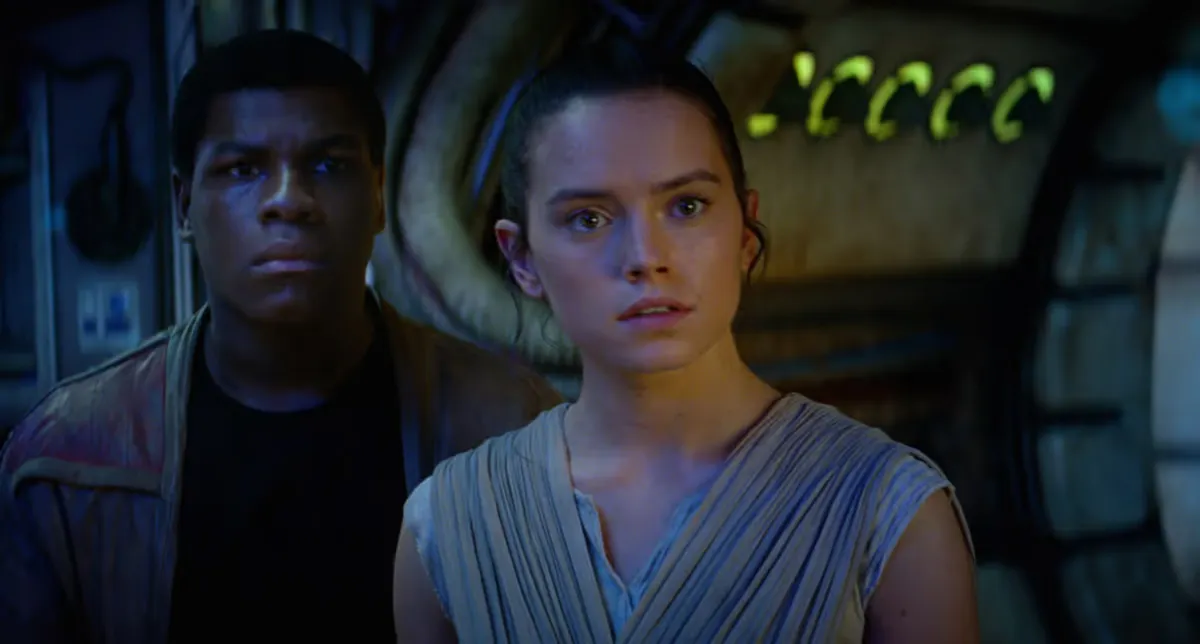
It’s basically impossible to consider The Force Awakens on its own merits 10 years later.1
People tend to be split on the follow-up installments of the Sequel trilogy. Either they love The Last Jedi and despise The Rise of Skywalker, or they hate TLJ and tolerate The Return of Palpatine.2 Most agree the trilogy was a failed endeavor.3
I prefer the word tragedy.
There are worse things than disappointing Star Wars. I mean, just look around. You can probably name a dozen things without thinking too hard. Bad movies are literally the least of our problems. Spare emotional RAM is a luxury.
It’s easy to get hyperbolic about this stuff because it actually doesn’t matter. Also the internet rewards spicy takes and we’re all fighting over the same few minutes of attention. But I legitimately consider the Sequel trilogy a tragedy. Lower case ‘t’ but still.
This is the flip side of investing too much of yourself in stories. Similar to Horcruxes, it hurts when something comes along and mishandles your precious.4 It’s important to maintain perspective though, especially for me, who once unironically wrote about myself:
I was born 9 months after Star Wars premiered in 1977, which naturally suggests my mom’s womb quickened on its own after she saw the film. I get it—these movies make me feel things too. I’m not saying I’m a Chosen One, only that I wasn’t ready to be born into a world without Star Wars.
There’s no avoiding it though. The last two-thirds of the trilogy overshadows the exciting, propulsive beginning and takes the spark out of its lightsaber.5 Consider this single fact—a final digression before we get to the meat, promise—The Force Awakens was written by the guy who wrote Toy Story 3 and the guy who wrote The Empire Strikes Back; The Rise of Skywalker was written by the guy who wrote Batman v. Superman: Dawn of Justice.6 Put nicely, there was a general degradation in quality.
Watching The Force Awakens—henceforth TFA because I’m not being paid by the word here—in 2026 is an exercise in the kind of duality that plagues clairvoyants and the type of people who triumphantly declare “I knew it” when things go wrong: the weight of foreknowledge. You’re trying to enjoy the film for what it is—fast, fun—but the viewing is hampered by knowing that ultimately, none of this matters. Promises remain unfulfilled—or unfulfilling. The potential is forever squandered.
Star Wars has had two periods of great anticipation, both of which coincided with a new trilogy after a long cinematic drought.
Nothing can ever top the hype for The Phantom Menace. It literally can’t be replicated. We were a different people then, and the world a slower place. I watched the first trailer using dial-up at my girlfriend’s house because we didn’t have internet at mine. It took roughly an hour to download—streaming hadn’t yet been invented, which makes this story feel even older—and had a display resolution of 108p.7 It’s a good thing a lot of that trailer involves Tatooine because the footage was hella grainy.
TFA didn’t enter into a content vacuum like Episode I but, having witnessed firsthand the marketing firepower for both, the build-up came surprisingly close. Of all the things the Prequels introduced, the most surprising was the realization that Star Wars could actually be bad. More than once, even! That sounds incredibly shortsighted and obvious, but previous to 1999, Star Wars had only ever been awesome. Even when it was watered down by Ewoks and cocaine, still great. The possibility that it could be anything but never crossed my mind. That’s probably true for most of us.
When I think about TFA, mostly what I remember is that intermediary period between when the film was announced and when it released. The internet was fully formed by this time, which meant I could drink at any geeky watering hole that’d have me. The excitement was palpable. I spent most of the time leading up to Episode I in a kind of fugue state. I couldn’t accept that it was actually happening. TFA was different. And not just because Han Solo was returning.