
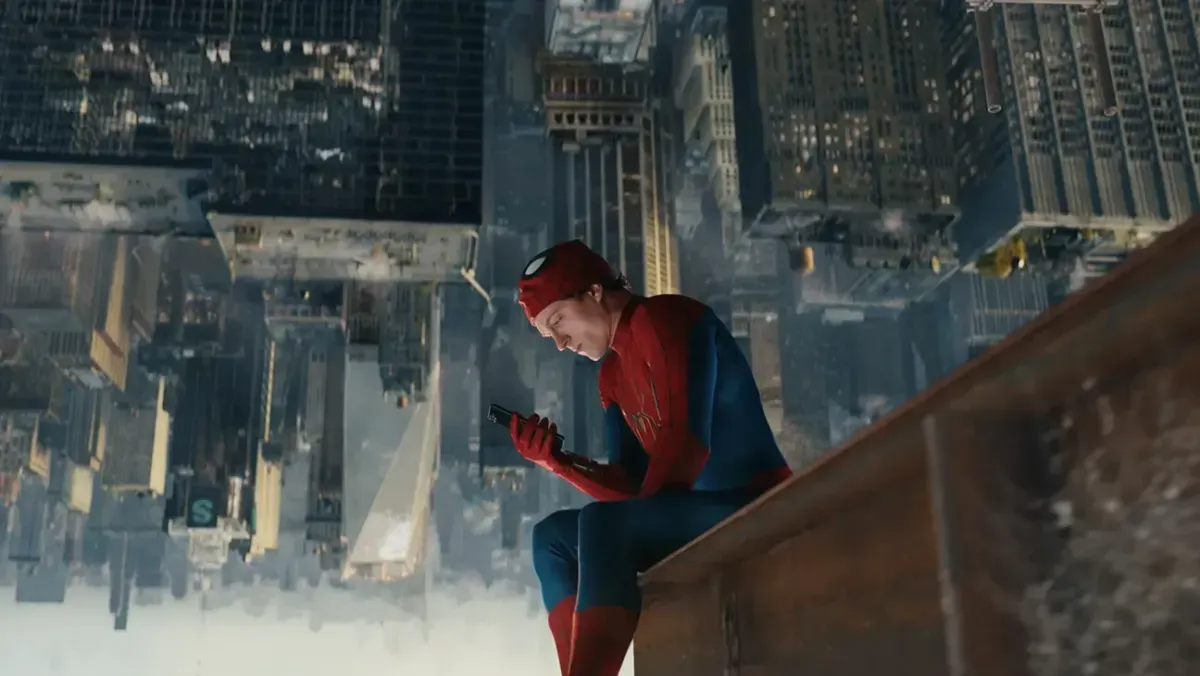
When a new Spider-Man movie comes out, you go see it. I don’t make the rules.
Comic book movie fatigue is real, but my tolerance for this stuff is higher than the norm. Growing up I regularly ran around my mom’s house wearing superhero underoos outside of my pants and a kitchen towel pinned to my shirt. On purpose. For fun. I even recruited my younger brother into these shenanigans. Today that’d probably be considered child endangerment.
I take superhero movies seriously, in that I approach them as Real Movies and also think about the things they unintentionally posit. The questions rattling around in my head before seeing Brand New Day are the same ones I still have after seeing it:
- How long are we going to fascinated by a superhero whose signature power is shooting white fluid out of his body?
- How much of Peter’s spider DNA would have to manifest, Cronenberg‘s The Fly style, before we nope out on the character concept altogether?
- What does it mean that we, as a society, have decided that forever-adolescent-ish Spider-Man is part of the triumvirate of our Most Important Superheroes, along with Superman and Batman?
Every Spider-Man Story Is About Puberty
It’s no coincidence that Peter Parker gets bitten by the spider as a teenager, when his body is already undergoing massive changes. The radioactive bite dovetailed with his body’s own metamorphosis until they became interchangeable, making his journey immediately universal.
Who among us hasn’t woken up like this:
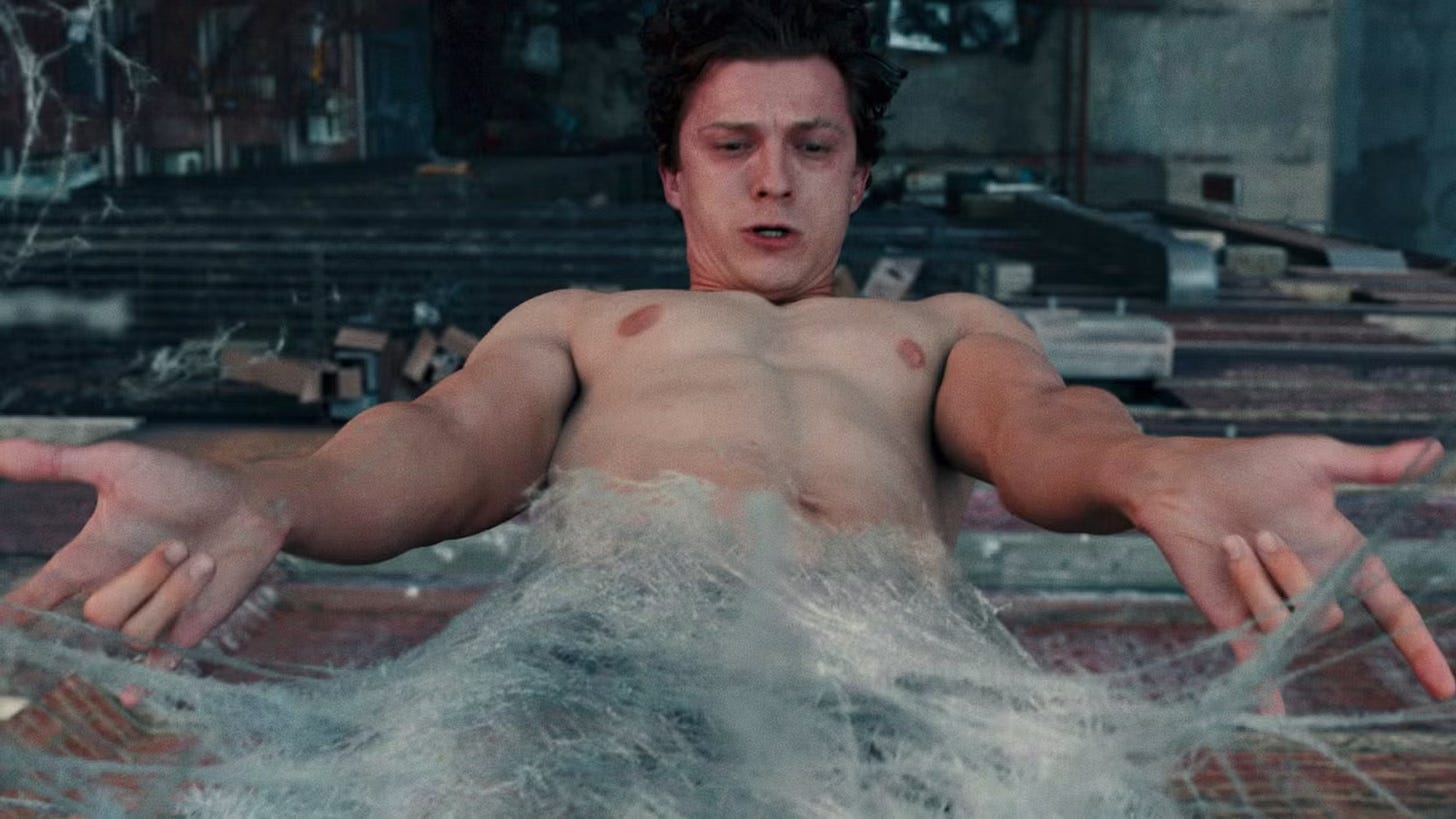
Puberty was always part of the text. Not even subtextually. Actively. Even if you didn’t make the connection consciously, the beats were awkwardly familiar. Since these are PG-13 movies meant for 10-year-olds and people who identify therein, the puberty-ness of it was always firmly in the background, felt if not processed, like when you realize your spouse is waiting for a response but you have none because you were thinking about Important Things like Spider-Fluids.